
DECISIONS by THE LISBON WEDDING PHOTOGRAPHER
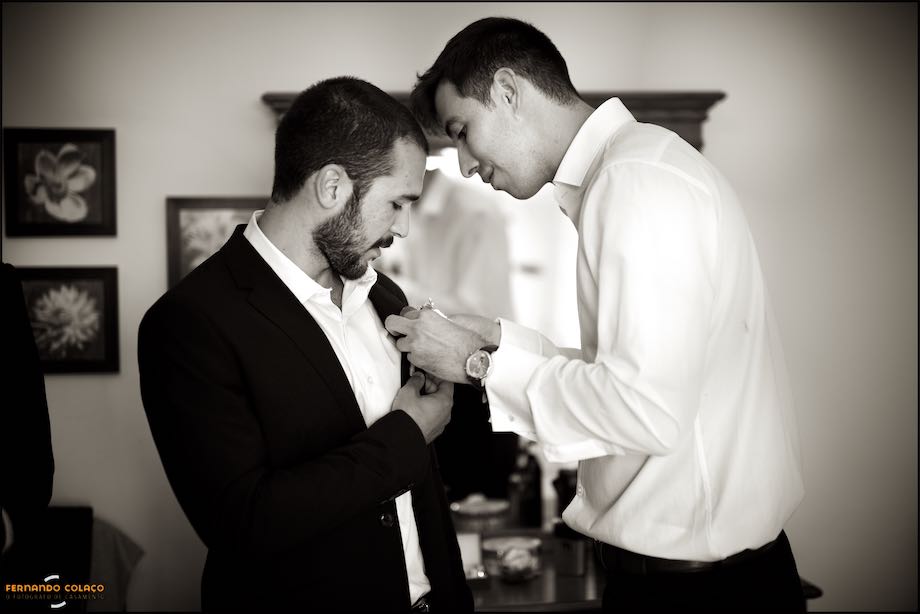
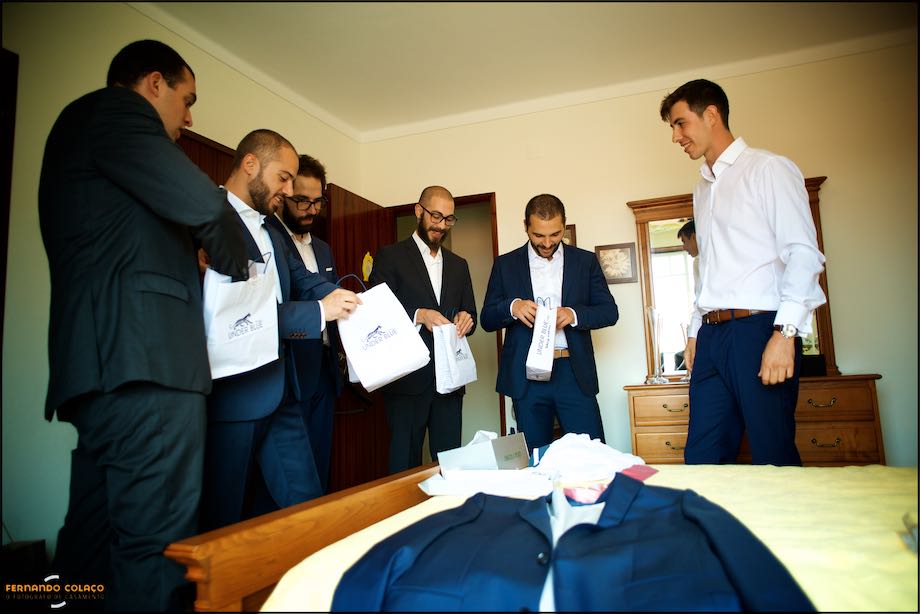
The groom is getting ready for the wedding with his friends at Quinta do Castro in Cadaval
• Pode ler este artigo em Português.
The Wedding Photographer’s Ability to Improvise: The Art of Capturing the Right Moment
The work of a wedding photographer goes far beyond creating beautiful images. Photographing a wedding means following a story as it unfolds in real time, with no possibility of repeating the moments, and that requires experience, attention, and, above all, the ability to improvise.
Throughout the day, everything is constantly changing. The light shifts, people move, events unfold one after another, and quite often the conditions are far from perfect. It is precisely in these moments that the experience of a wedding photographer makes a difference.
Being able to adapt quickly, find a new position, understand the available light, and anticipate what is about to happen are essential skills for creating spontaneous and meaningful wedding photographs.
The Ability to Improvise on the Wedding Day
At a wedding, there is no perfectly controlled setting throughout the entire day. The photographer works with what is available and has to make decisions within a few seconds.
A window may provide beautiful light, but only for a few minutes. A room may look perfect from one angle and reveal difficult shadows as people move around. During the ceremony, reception, or preparations, events rarely wait for the photographer.
That is why photographing a wedding requires constant attention to:
- the direction and intensity of the light;
- the position of the bride, groom and guests;
- the atmosphere and elements within the scene;
- what is happening at that precise moment;
- what is likely to happen next.
This constant awareness makes it possible to react without interrupting the natural flow of the day.
When the Light Is Not on Our Side
Light is one of the biggest challenges in wedding photography. We do not always have ideal light and, quite often, we have to work with exactly what is available.
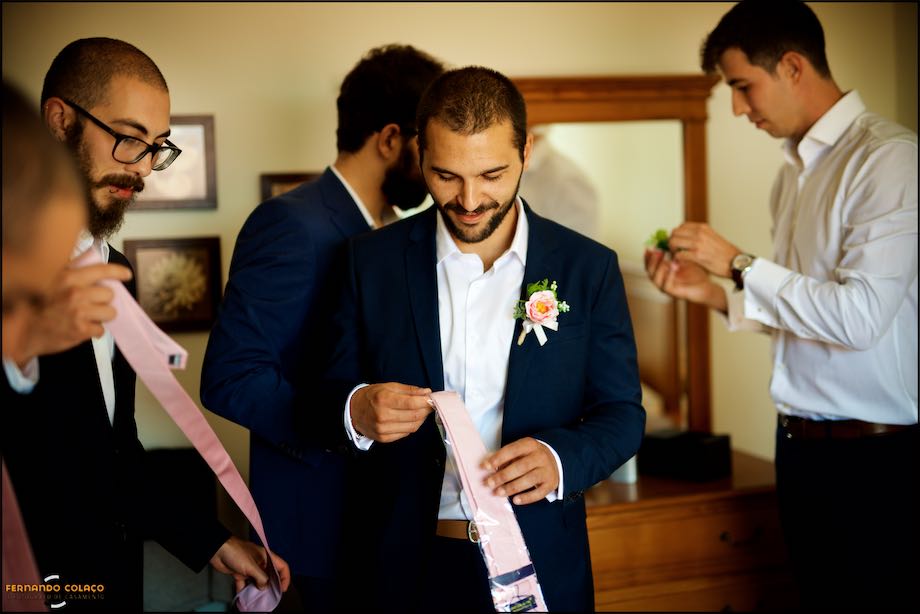
In a bedroom, for example, we may find a window producing very strong light while other areas remain in shadow. At another moment, the movement of people or a change of position can completely alter the lighting of an image.
The photographer needs to understand quickly how to make the most of those conditions. It may be necessary to change position, wait for a fraction of a second, adjust the camera settings, or simply choose a different composition.
Rather than looking for perfect conditions, it is about knowing how to work with the reality of the moment.
For this, it is important to:
- quickly identify the most favourable light;
- find the position that best suits the scene;
- adapt the camera settings to the available conditions;
- recognise when it is better to wait or change position.
Improvisation does not mean photographing carelessly. It means knowing how to make quick decisions when circumstances do not match what we initially imagined.
Capturing the Right Moment
Light is only part of the challenge. At a wedding, the right moment may last for just a second.
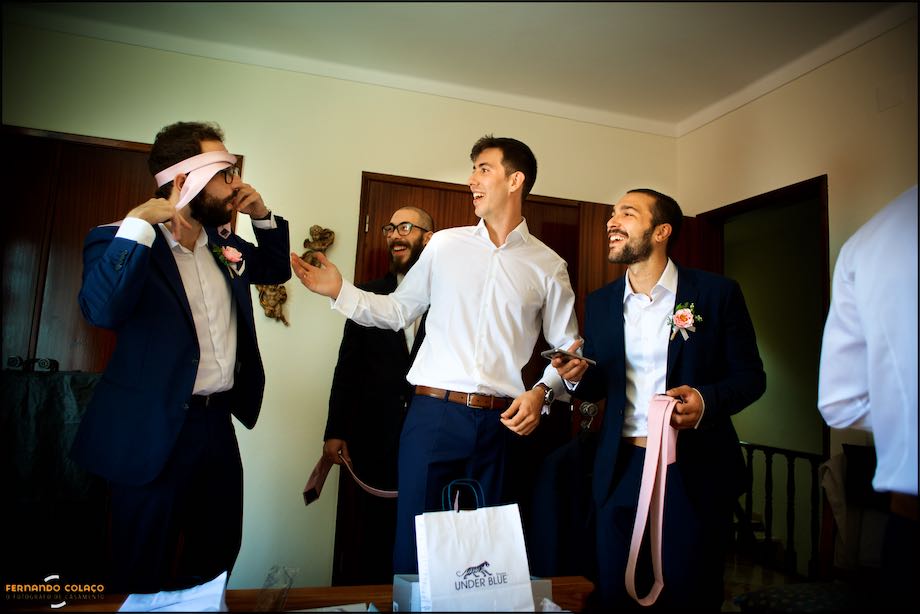
A look between the bride and groom, a guest’s reaction, an unexpected embrace, or a spontaneous gesture can disappear immediately. There is no way to ask for the situation to happen again in the same way.
This is where experience becomes especially important.
Before pressing the shutter, the photographer has to quickly assess what is in front of them: where the light is, which viewpoint works best, what should be included in the frame and, above all, when the photograph needs to be taken.
We can summarise this process in three essential decisions:
- Find the viewpoint that best tells that particular moment;
- Build the composition without losing what is happening;
- Anticipate the right instant to capture the photograph.
On a wedding day, these decisions happen continuously and, very often, within just a few seconds.
Improvisation and Personal Style
Improvisation does not mean abandoning a photographic style. On the contrary, experience is what allows a photographer to adapt without losing their identity.
Every wedding photographer develops their own way of observing, framing, and interpreting what happens. The equipment may be similar, but the way of seeing is different.
This is also why couples choose a particular photographer for their wedding. They are not simply looking for someone who knows how to use a camera. They are looking for a particular way of telling their story through photographs.
Having a defined style, however, does not mean trying to control everything. At a wedding, much of the beauty lies precisely in what was never planned.
The photographer needs to be ready to react to the unexpected, follow the rhythm of the day, and photograph without unnecessarily interfering with what is happening.
Improvising Like a Jazz Musician
I like the comparison between the work of a wedding photographer and a jazz musician.
A jazz musician knows their technique deeply, but cannot predict exactly everything that will happen during an improvisation. They have to listen, react, anticipate, and follow the rhythm.
Something similar happens in wedding photography.
The photographer knows their equipment, understands exposure, reads light, and has developed a personal photographic language. But when the moment happens, they have to react to what is in front of them.
It is almost a continuous dialogue with the day:
Observe, anticipate, react, and photograph.
This ability makes it possible to create wedding photographs that do not feel manufactured, because they emerge from what actually happened.
Conclusion: Photography Is About Telling Stories
Photographing weddings has always been, for me, a way of telling stories.
Every wedding has its own rhythm, its own people, its own places and its own emotions. There is no formula capable of predicting exactly how the day will unfold. That unpredictability is precisely what makes the work so interesting.
A wedding photographer is not there only to record events. The photographer is there to observe, interpret, and transform moments that pass quickly into images that remain.
The ability to improvise is an essential part of that process. It makes it possible to work with the available light, react to the unexpected, and be ready when a moment that was never planned suddenly becomes one of the most important photographs of the day.
To Preserve the Moments That Cannot Be Repeated
If you are planning your wedding and looking for photographs that tell the story of your day naturally, I would be delighted to meet you, learn more about your plans, and understand what matters most to you.
Get in touch and arrange a meeting so we can talk about your wedding, your expectations, and how I can tell your story through photography.
- These photos are of the groom and his friends as they prepare for their wedding day at Quinta do Castro in Cadaval.