
REFLECTION by THE WEDDING PHOTOGRAPHER IN PORTUGAL

How mirrors can be a great source of photographs during bridal preparations
• Pode ler este artigo em Português.
The Wedding Photographer: Photography, an Altered Reality

The wedding photographer is more than just a technical observer with a camera. They are an image creator who transforms reality without lying about it. When capturing wedding photographs, the photographer doesn’t merely reproduce what they see but seeks to interpret light, reflections, and moments through a lens that both alters and reveals.
Wedding photography is, by nature, a transformed reality. The lens captures, interprets, and creates. And it’s in that process that the beauty of each image delivered to the couple lies. The wedding day is not merely documented — it is elevated to a visual dimension rich in symbolism, emotion, and art.
Metamorphosing Light in the Wedding
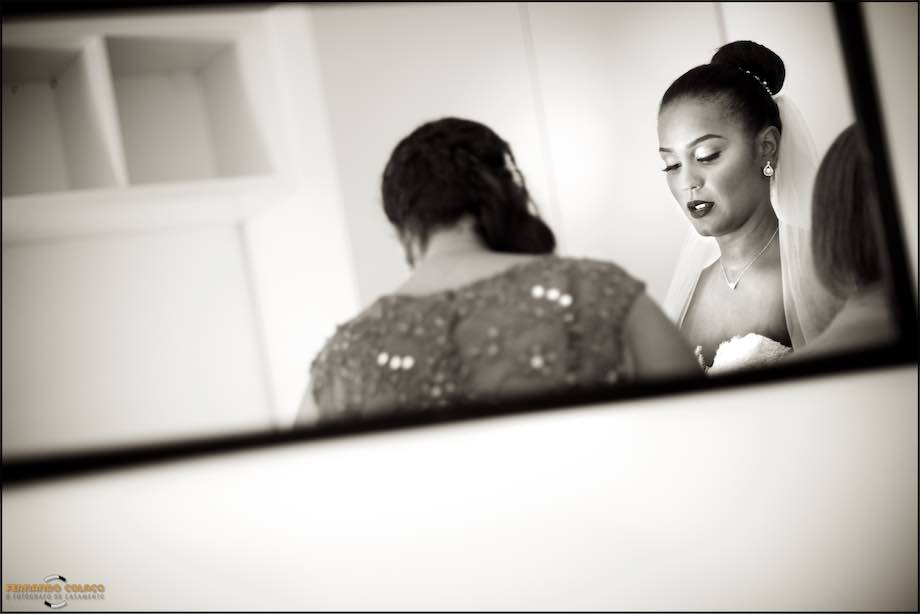
As a wedding photographer, my fascination with light begins with its transformation. When I look into a mirror, I see an inverted reality — but not a false one. The same happens in photography: what I capture isn’t a replica of the world but a new version, filled with intentions and visual choices.
I reject the idea of creating images that are exact copies of reality. If it were that simple, there would be no reason to photograph. It’s precisely the limitation of the camera compared to the human eye that attracts me. That limitation is the space where creativity is born.
The Role of the Lens in Creating Another Reality
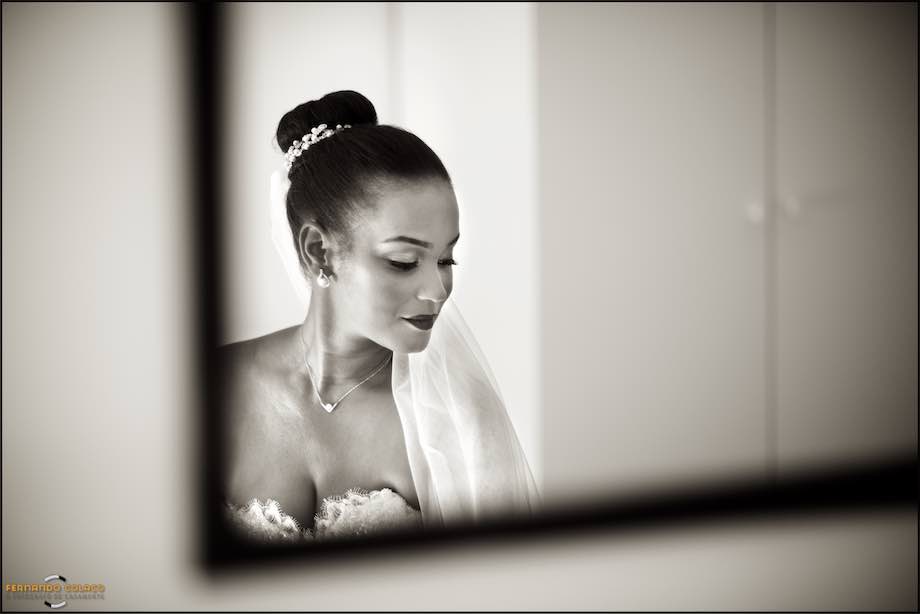
The photographic lens is the mediator of that transformation. It shapes light, distorts space, and composes a new scene. In the context of a wedding, this means turning the ordinary into the extraordinary, the common into the symbolic. The reflection in a mirror, the light through a window, the gentle movement of the bride’s veil — all can be transformed.
Key points about the lens and transformation:
- The lens never reproduces reality — it interprets it.
- Light, passing through the lens, becomes a visual narrative.
- Each photo is the result of technical and emotional choices.
Mirrors: Portals to Another Visual Dimension
I have a special affection for mirrors. They are static, even cold objects, but they offer me one of the most powerful tools to create an altered reality within photography. The reflection they show is not neutral: it’s limited by angle, distorted by inversion, and influenced by the viewer’s position.
Over the years, in many weddings, mirrors have helped me produce some of the wedding photographs I most cherish. In them, the bride prepares in silence, the groom smiles nervously, and wedding guests move in the background. All in one image, duplicated and altered.
Advantages of photographing with mirrors:
- They add layers of visual interpretation.
- They help compose with depth and surprise.
- They introduce a symbolic play between reality and illusion.
A Photograph: Imperfect Copy of Reality
A photograph is always a copy, but never perfect. It’s another version of what happened, shaped by many factors: point of view, lens, light, and timing.
The wedding photographer knows this. They work with that imperfection and transform it into style. Rather than denying alteration, they embrace it as part of the creative process.
Why every wedding photograph is unique:
- The camera imposes physical and optical limits.
- The lens imposes aesthetic and technical choices.
- The photographer brings emotion, intention, and storytelling.
Photographing the Invisible on the Wedding Day
The real challenge is to capture what isn’t visible: contained emotion, hidden tension, subtle gestures. Photography allows that because it’s not a literal transcript — it’s an interpretation. That’s where a passionate wedding photographer stands out.
By accepting the alteration of reality as part of the process, infinite creative paths open. The mirror, the window’s reflection, the shadow on the floor — all can tell what’s left unsaid.
Key Points:
On the creative process:
- Photography is translation, not literal reproduction.
- The camera doesn’t see like the eye — and that’s a good thing.
- Altering reality in photography is an act of creation, not deception.
About your wedding:
- The images I deliver will be altered realities, but full of truth.
- The light, reflections, and angles are chosen to tell your story.
- Every photo from your wedding day will be unique, emotional, and authentic.
Conclusion
Being a wedding photographer is about accepting that photography will never be identical to the world it represents. It is both a reproduction and an invention. Working with mirrors, reflections, and lenses is a way of embracing that duality. Wedding photographs do not lie — but they do not merely show. They interpret, feel, and tell. And it’s within that space of transformation that the true magic of wedding photography lives.
Let’s Talk
If you’re looking for a wedding photographer who sees photography as more than just a faithful copy of reality, contact me. Let’s talk about light, mirrors, and emotions — and how we can turn your wedding day into a visual memory that’s as real as it is transformed, as truthful as it is beautiful.
- You can see a full wedding story: